What is "hanging weight" and why do you price on it?
Hanging weight is the weight of the carcass after harvest but before it's boned, trimmed, and cut — what's actually hanging in the butcher's locker. It's the standard unit in this business because it's the only weight that exists before you make your cutting decisions.
It is not the weight of packaged meat you'll take home. Plan on roughly 60–65% of hanging weight in your freezer, depending on how much you have boned out and how lean you want your ground.
Why can't you just tell me the price?
Because we don't know what the animal weighs until it's harvested. We charge $4.75 per pound of hanging weight, and the hanging weight is what it is.
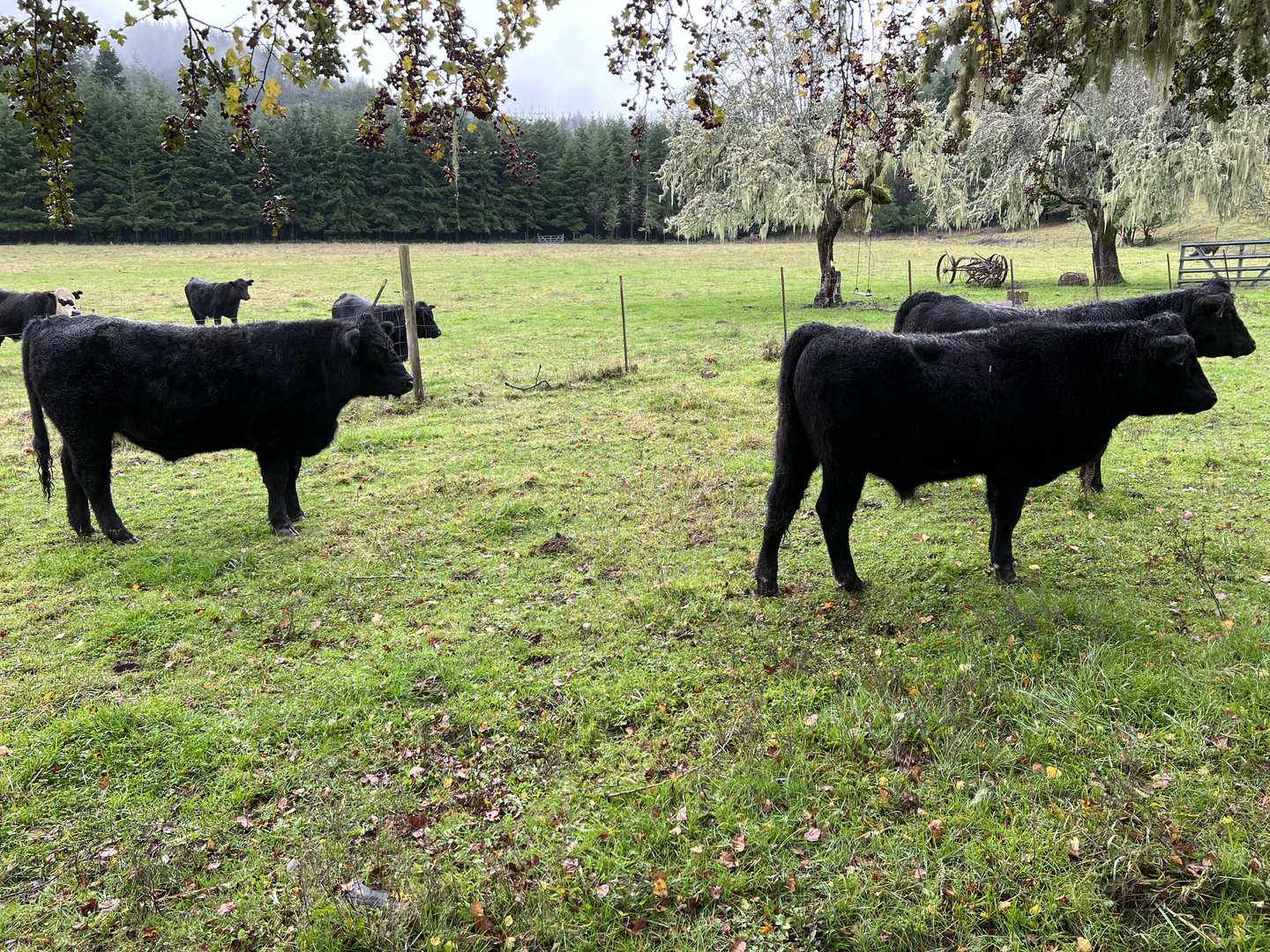
Last year our two steers came in close together at 708 and 728 lbs, which averages 718. But they don't always land that near each other — we've had an animal come in at 598 in a previous year, and on a half share that's roughly a $310 swing against last year's heavier steer. Use the calculator above to bracket your own range rather than banking on a single number.
Is this grass-fed beef?
Pasture-raised, grain-finished. They spend their whole lives on grass, pasture, and hay cut across the highway, plus whatever fruit falls in late summer. In the last three months or so we supplement a small amount of good grain, which is what develops marbling and flavor.
We'd rather describe it accurately than reach for a label. The small amount of finishing grain bears no resemblance to a commercial feedlot ration, and we only treat with essential preventative medicines.
How much freezer space do I need?
Rough rule: about one cubic foot of freezer space per 35–40 lbs of packaged beef.
A quarter (~105 lbs) fits in a 5 cu ft chest freezer with room to spare. A half (~210 lbs) wants a 7–10 cu ft chest. A whole beef (~420 lbs) needs a dedicated 15–20 cu ft freezer. Sort this out before harvest day — every year someone doesn't.
I've never given a butcher cutting instructions. Is that a problem?
Not at all, and you should say so when you call. Oakland Lockers walks first-timers through the whole sheet — steak thickness, how many per package, roast sizes, ground beef pack size, whether you want soup bones and organ meat, and which cuts you'd rather have ground.
If you want a starting point: ¾" steaks, two per pack, 3–4 lb roasts, and 1 lb ground chubs is a sensible default that a lot of our customers land on.
Can I split a half with a friend?
Yes, and it's the most common way people buy a quarter. Just know that the two quarters off one half share a single cut sheet — the same steak thickness, the same package sizes — and larger primals get divided. It goes much more smoothly if you know your partner. If you're buying a quarter solo, I'm happy to put you in touch with whoever's on the other half so you can agree on the sheet.
How do I pay, and when?
Two separate payments. You pay us after harvest, once we send you the hanging weight — Venmo, Google Pay, check, or cash. You pay Oakland Lockers directly for processing when you give them your cutting instructions; they take cash, check, or card (card adds 4%, which is their processor's fee passed through).
Nothing is due to get on the list.
When's the next harvest, and can I still get in?
The December 2026 harvest is sold out. The next is December 2027, and you can add your name to the list now. We only run about three steers a year, so shares are genuinely limited and we can't promise everyone a spot — getting on the list just tells us you're interested so we can reach out when we're planning the harvest. It costs nothing and there's no obligation.
Where exactly are you, and can I get beef where I live?
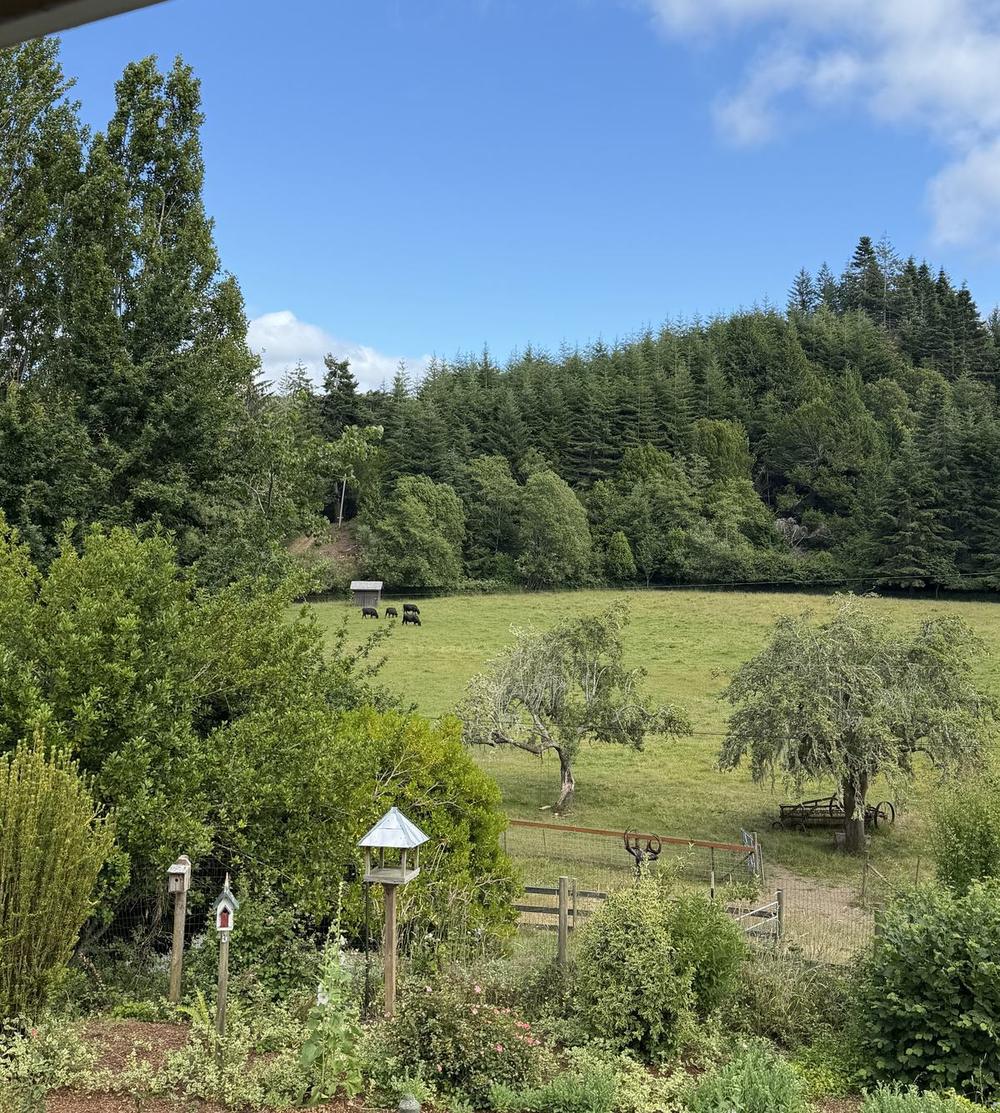
The farm is 100 acres just outside Bandon on the southern Oregon coast, and processing happens at Oakland Lockers in Oakland, Oregon. But you don't have to come to us.
We have a regular drop-off point in Milwaukie for the Portland metro, we can arrange a hand-off anywhere along the I-5 corridor between Portland and Roseburg, and down south we can meet you anywhere from Roseburg to Bandon. If you're somewhere in between, just ask — we work out delivery with every buyer.